Problem
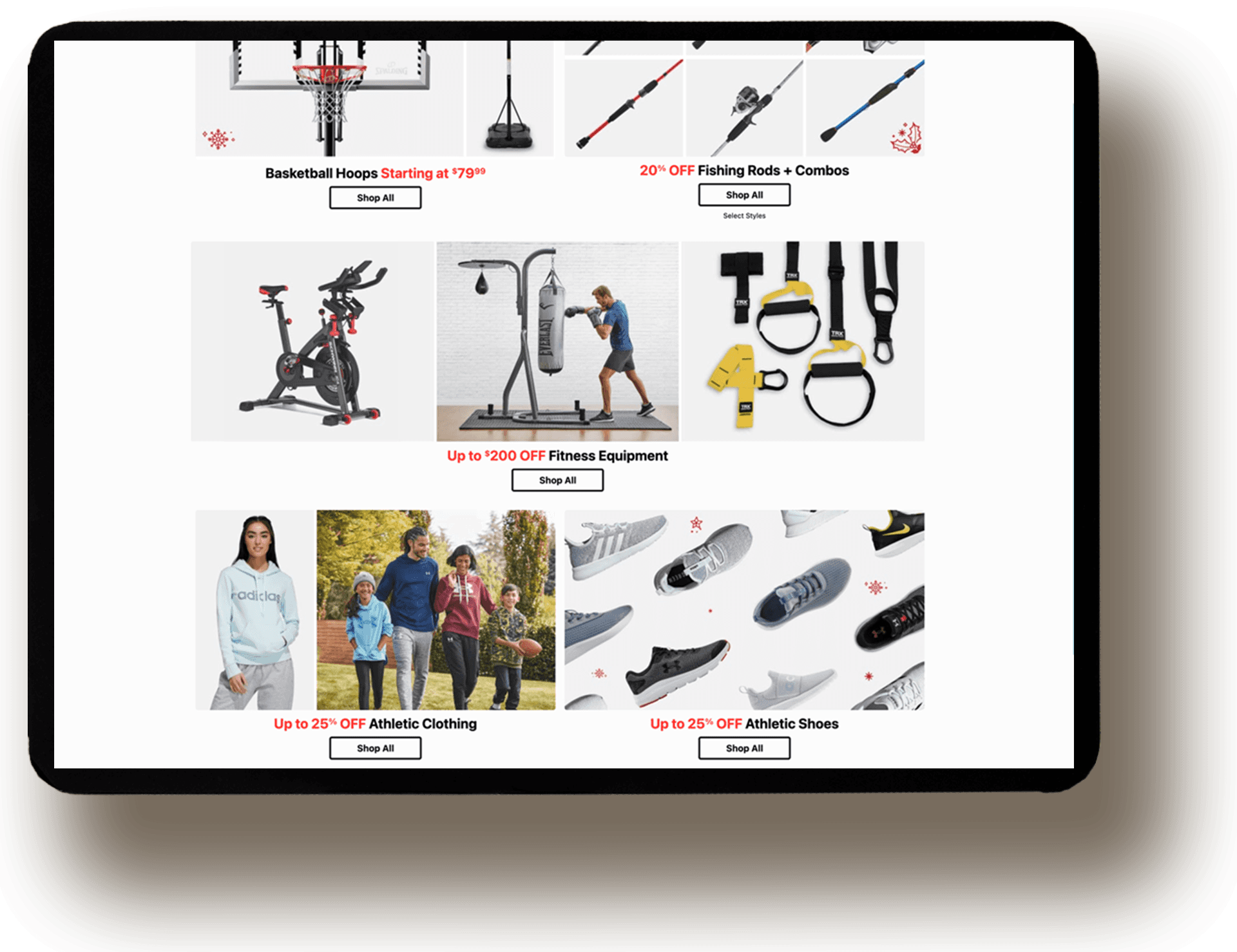
Academy Sports + Outdoors was scaling a digital commerce platform serving 2M+ monthly visitors across sporting goods, outdoor equipment, and apparel — a product breadth that made information architecture one of the most high-stakes design problems in the business. Users arriving with high purchase intent couldn't find what they were looking for. Search was over-relied on because navigation failed to reflect how customers actually thought about products across overlapping categories like camping, hunting, and footwear. The taxonomy had been built reactively — categories added as product lines expanded, without a unified mental model or cross-category browsing logic. This created dead ends in navigation, inconsistent filter behavior across departments, and a search experience that returned volume without relevance. Peak traffic periods, including the Christmas season, exposed these failures at scale: conversion dropped precisely when traffic spiked, because the architecture couldn't guide high-intent users to purchase. The project mandate was to redesign the information architecture and navigation system for a platform that had to serve both casual browsers and expert buyers across a product catalog of significant breadth and depth — without disrupting the live platform serving millions of active customers.
FINTECH
Senior Visual Designer, UX/UI Designer
YEAR
2021


PROCESS
Discovery & Taxonomy Audit
The project began with a full audit of the existing category structure mapped against actual search query data and browse path analytics. Card sorting sessions with a cross-section of Academy customers surfaced the mental model gaps — where the business thought about products by brand or department, customers thought about activity, season, and use case. This reframe became the organizing principle for the new IA.
Restructuring the Navigation Architecture
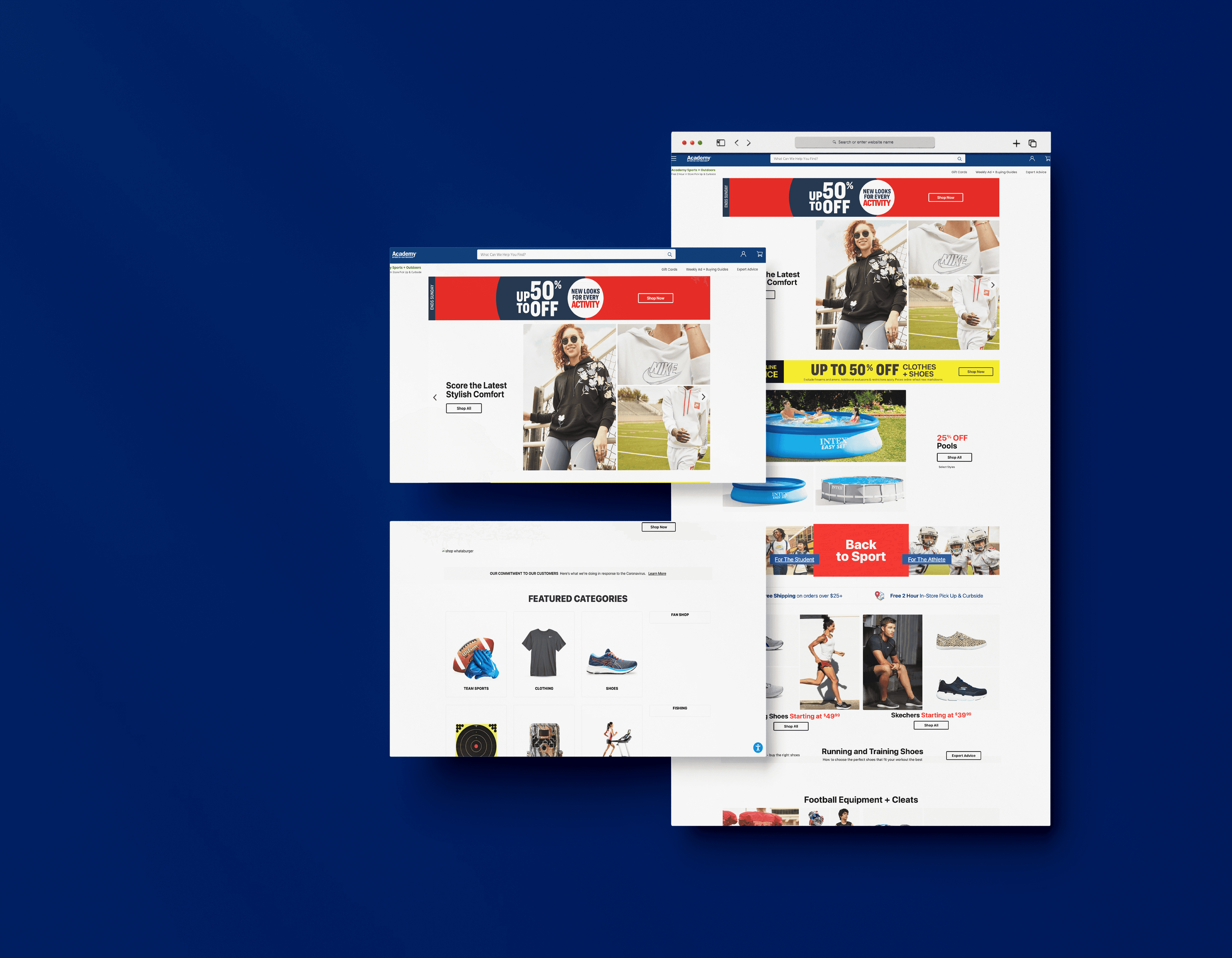
The redesigned taxonomy introduced an activity-first hierarchy at the top level, with department and brand logic subordinated to how customers naturally approach an outdoor retail experience. Cross-category browsing paths were built into the structure rather than patched in via search. Filter systems were standardized across departments so that behavioral expectations set in one category transferred correctly to another.
Search & Discovery Alignment
Navigation redesign was paired with search relevance improvements — the two systems needed to resolve to the same results for the same intent. Faceted search was introduced with consistent attribute taxonomies tied to the new IA structure, reducing zero-result rates and improving result precision for high-value product categories.
Outcomes at Scale
The redesigned IA shipped ahead of the Christmas peak season. That year's Christmas period drove record e-commerce performance — attributed in part to the navigation and discovery improvements enabling high-intent customers to reach purchase-ready product pages with fewer steps and less friction at the highest-traffic moment of the retail calendar.



Outcome
The Academy Sports project established a foundational principle that has informed every subsequent IA engagement: taxonomy is not an organizational problem, it's a user experience problem. When the structure reflects how customers think rather than how the business is organized internally, navigation stops being a feature and starts being invisible infrastructure that accelerates purchase decisions. The record Christmas e-commerce performance during the first holiday season post-launch validated the business impact of user-centered IA at scale. For a platform with 2M+ monthly visitors, even marginal improvements in browse-to-product conversion translate into material revenue outcomes — making this one of the highest-leverage design interventions of the engagement.